
What are zócalos?
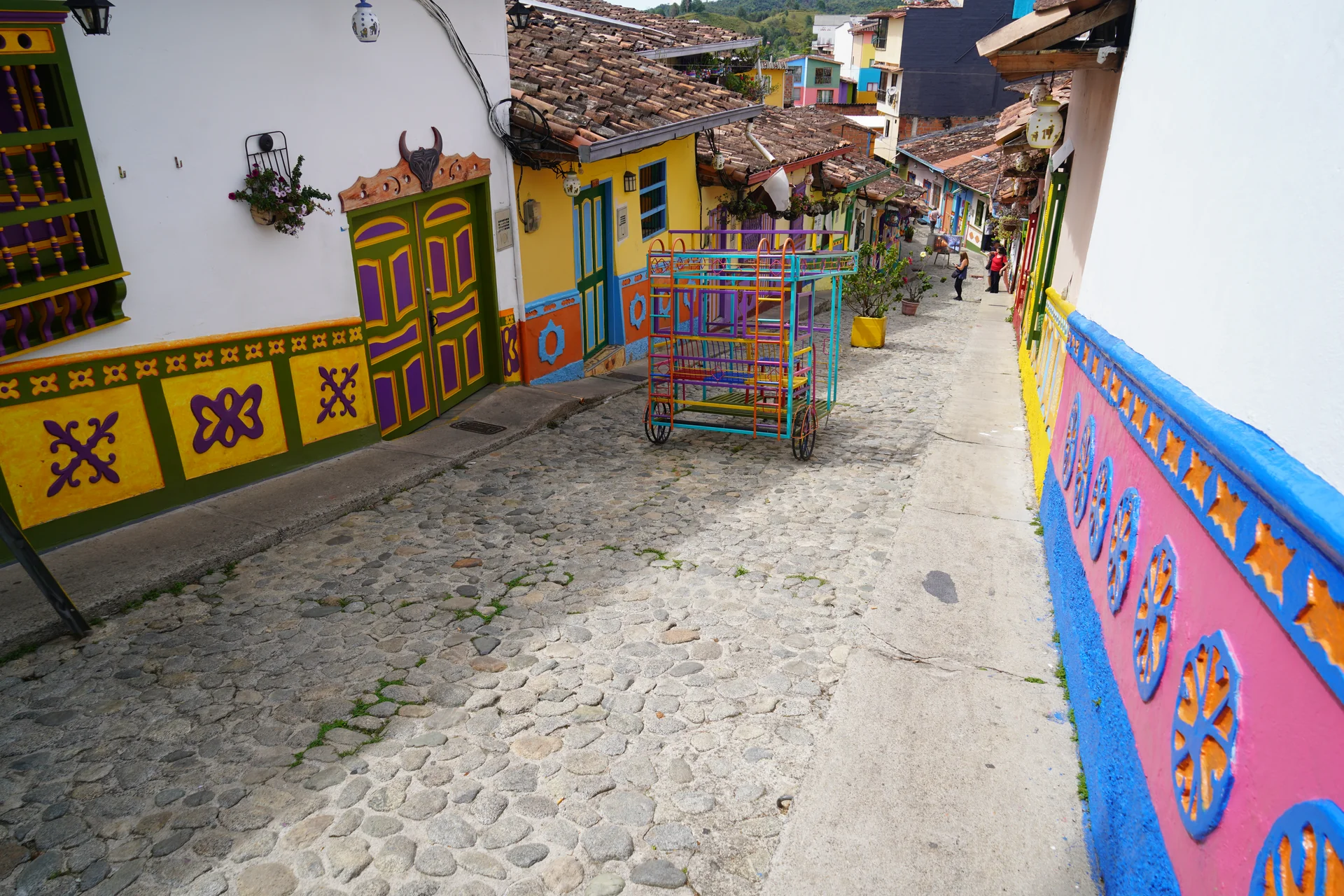
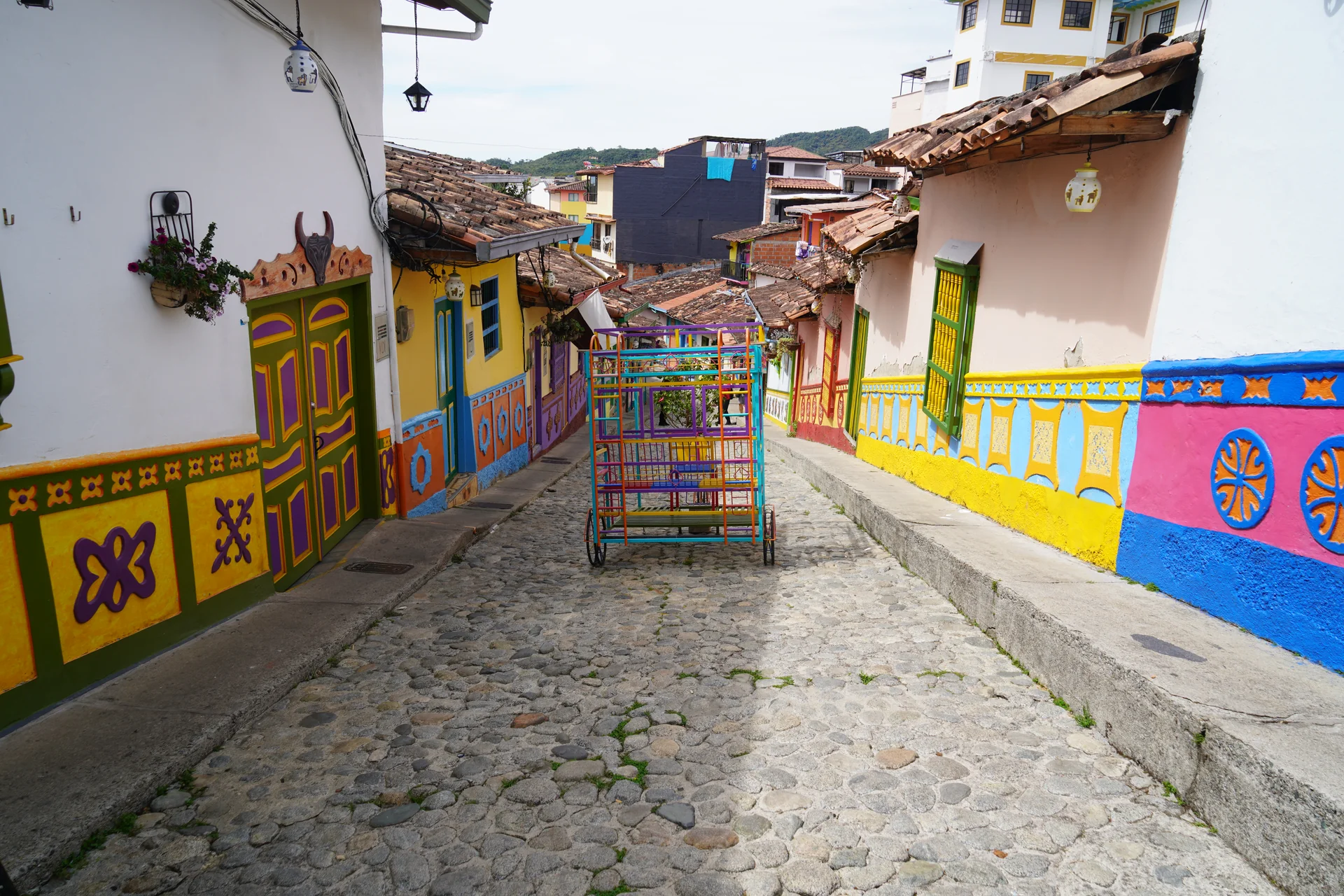
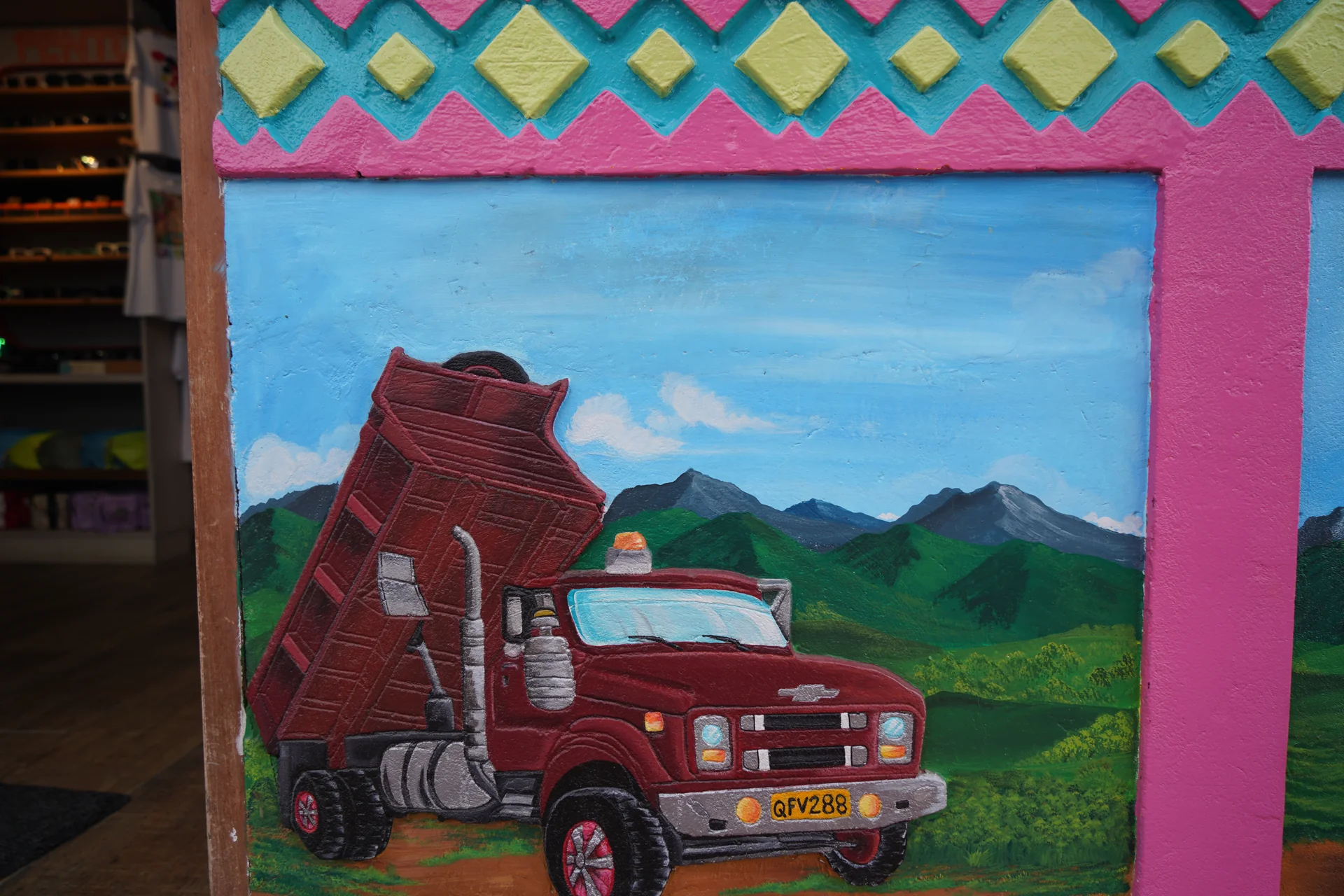
Across central Guatapé, many houses and businesses carry a painted, raised-relief panel — called a zócalo — along the lower part of their façades. A zócalo is the base band of a wall, used in several regions of Colombia for a practical purpose: made in cement, it resists damp and protects the base of the façade. What is distinctive about Guatapé is that here this plain, protective element was developed into decorated, painted relief.
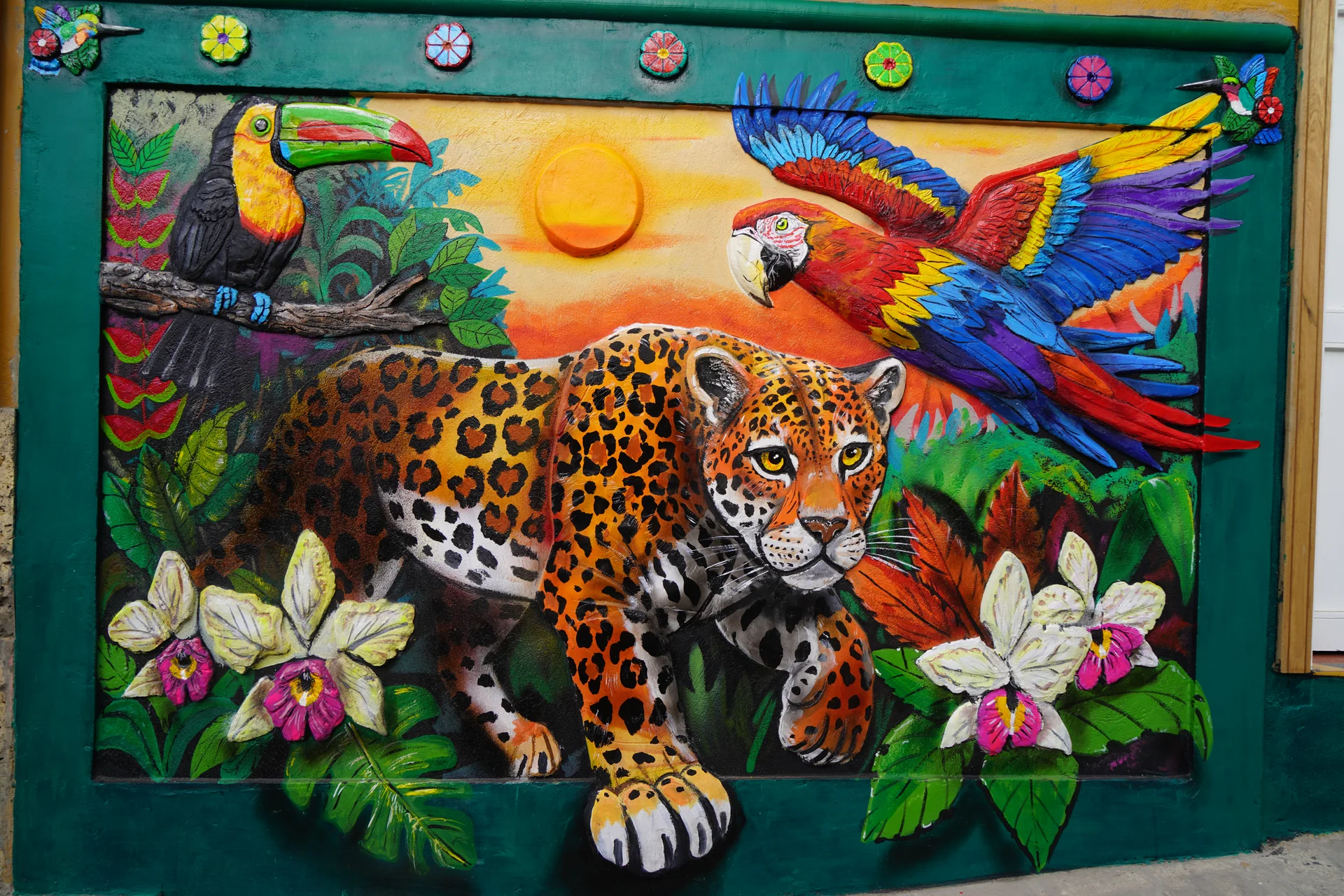
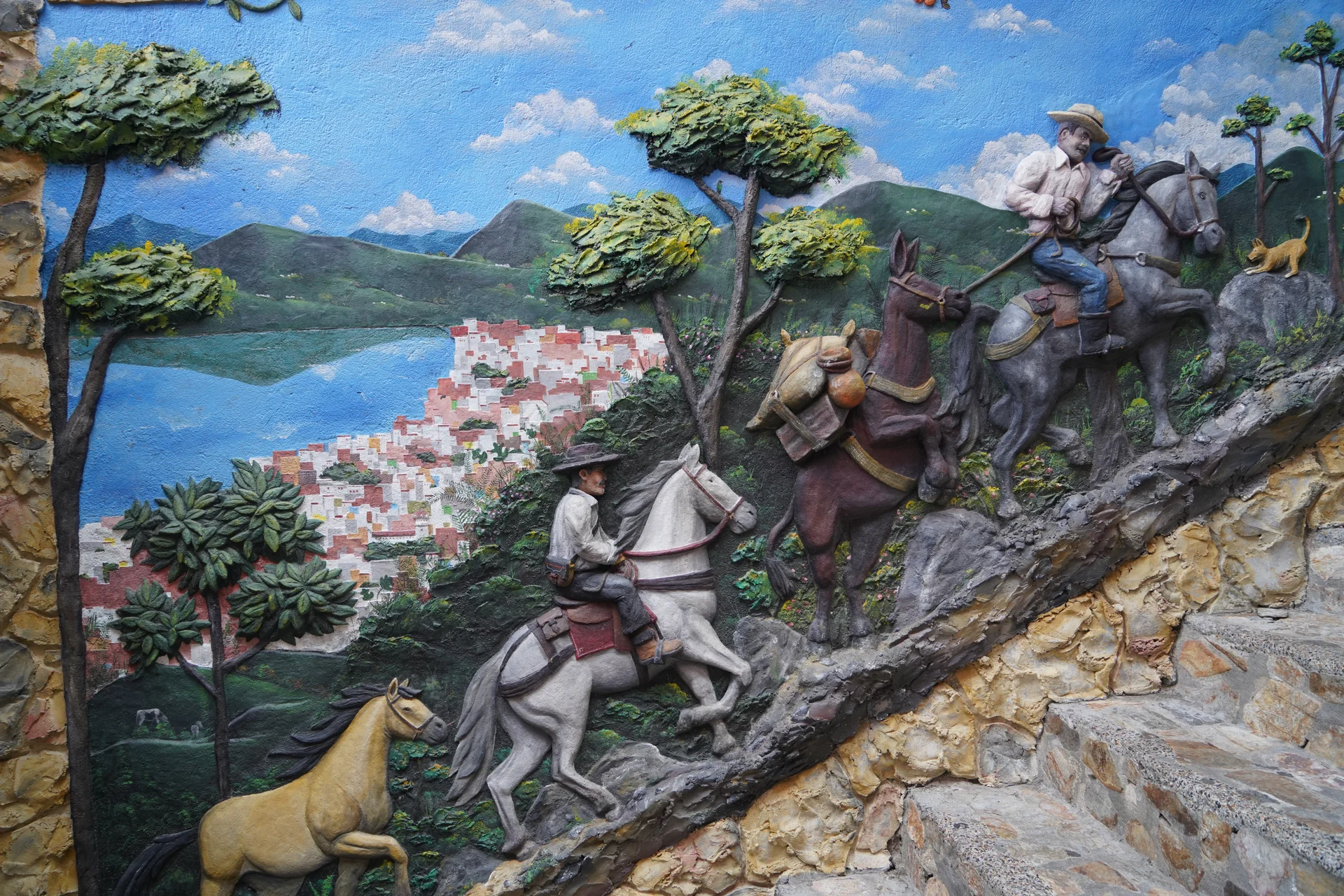
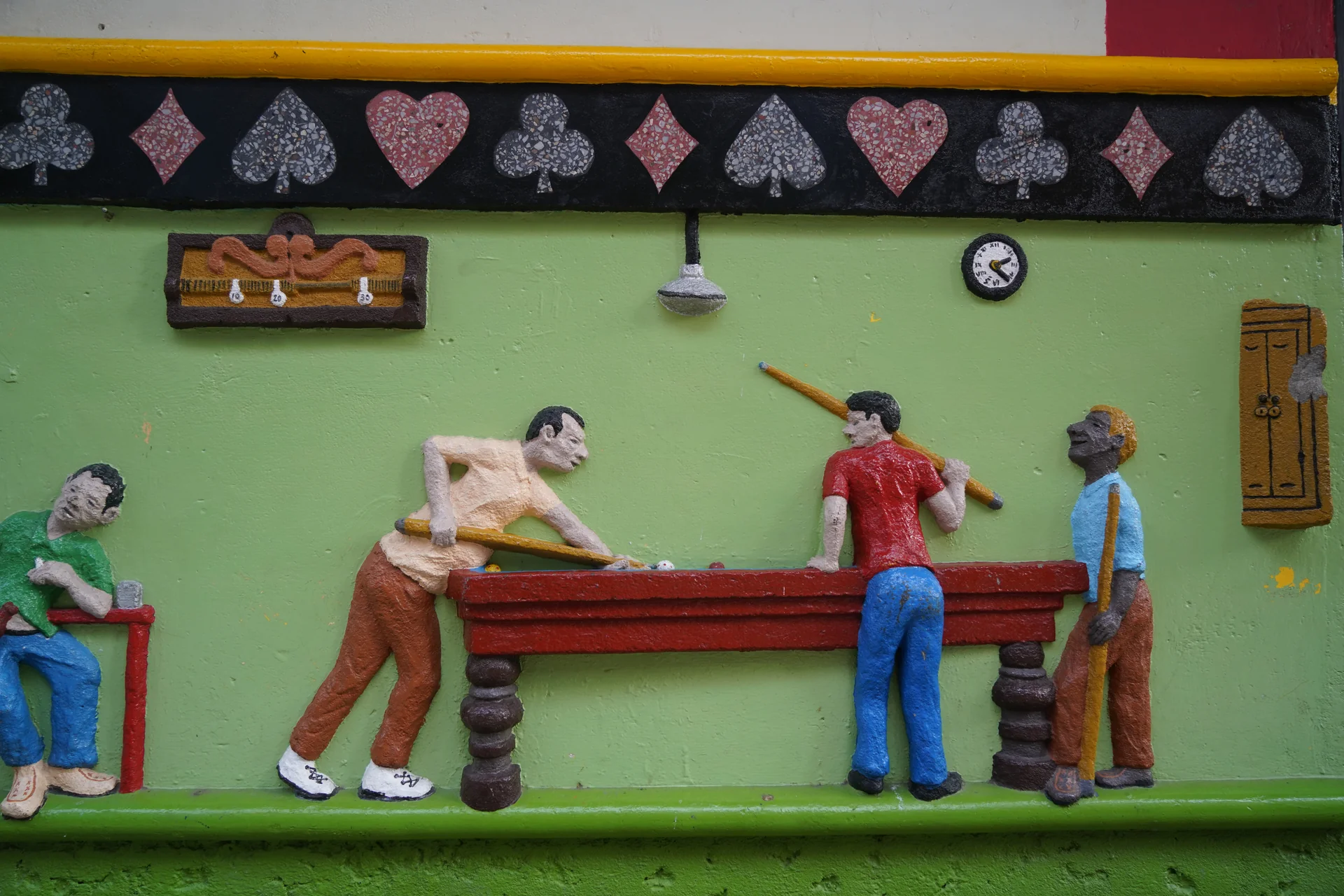
The panels are small reliefs worked in cement, not flat murals, and are later painted. They can be made and painted by local artisans. The subjects are wide-ranging: occupations, animals, landscapes, local economic activities, and family references. Some panels relate directly to a household or business, while others represent broader local history and identity.
Where did the tradition come from?
The decorative zócalo became significant in Guatapé from around 1919. The peer-reviewed research on the subject does not establish a single named inventor: it describes the initiator only as a person or a family who wanted to place a scene from their own daily life on the wall of their house. What is documented is that it began as a local, family-scale idea and only became the town’s shared identity later.
How the zócalos became part of Guatapé’s identity
For a long time the decorative zócalo was a limited, local practice. Guatapé’s economy and identity changed sharply in the 1970s, when the Peñol-Guatapé hydroelectric project, built by Empresas Públicas de Medellín, flooded 2,262 hectares of the municipality’s land. According to the municipality, this change turned Guatapé from a farming, livestock and mining town into a tourism destination, and the zócalos became central to that new identity.
In 2007 the municipality obtained the trademark “Guatapé, Pueblo de Zócalos”, and it continues to regulate zócalos on façades through its own municipal rules: a municipal decree in 2023; Acuerdo 9/2009 as modified by Acuerdo 10 of 19 August 2023.
Where to find the zócalos
The zócalos run along the streets of the town center. You do not need a tour: the simplest way to see them is to walk at your own pace, starting from the Calle del Recuerdo and continuing into the surrounding streets.
- Calle del Recuerdo — created in memory of the old barrio La Aldea, an area affected by the reservoir, and one of the places where Guatapé preserved and presented its zócalo tradition
- The blocks around the main plaza — a mix of older and newer panels
- The surrounding residential streets — worth seeing beyond the main corridor
How to look at them
There is a common idea that every zócalo tells the story of the family inside. Some do reflect a family’s trade or history, but there is no single code. The research records a broad range of subjects: everyday life, trades and occupations, notable local people, the region’s economic activities, landscapes, and local plants and animals. Slow down and look at the panels from both a few steps away and close up. It is worth some skepticism about neat backstories: residents themselves have said that outside guides sometimes tell incorrect stories about the zócalos, so read the panels yourself and ask locals rather than relying on a quick tour.
How long it takes
There is no fixed route and no ticket, so walk at your own pace. Wander the main zócalo streets and, if you have time, continue into the surrounding residential blocks.
Tips
- Look from both a few steps away and close up: the raised relief reads differently at each distance
- Walk beyond Calle del Recuerdo into the surrounding residential streets
- Read the panels yourself and ask locals rather than relying on a quick tour
The zócalos and the brand
GuatapeGuide.com’s brand palette is directly inspired by the colors of the zócalos — cobalt blue, warm gold, vermillion red, and forest green. If you notice the color scheme feels familiar after walking the streets, that’s intentional.
A note on sources
The history on this page follows peer-reviewed research on Guatapé’s zócalos and the municipality’s own records. Where the historical record is uncertain, such as who made the first decorative zócalo, this page says so rather than repeating a tidy story.
Photo Gallery
The Zócalos Up Close
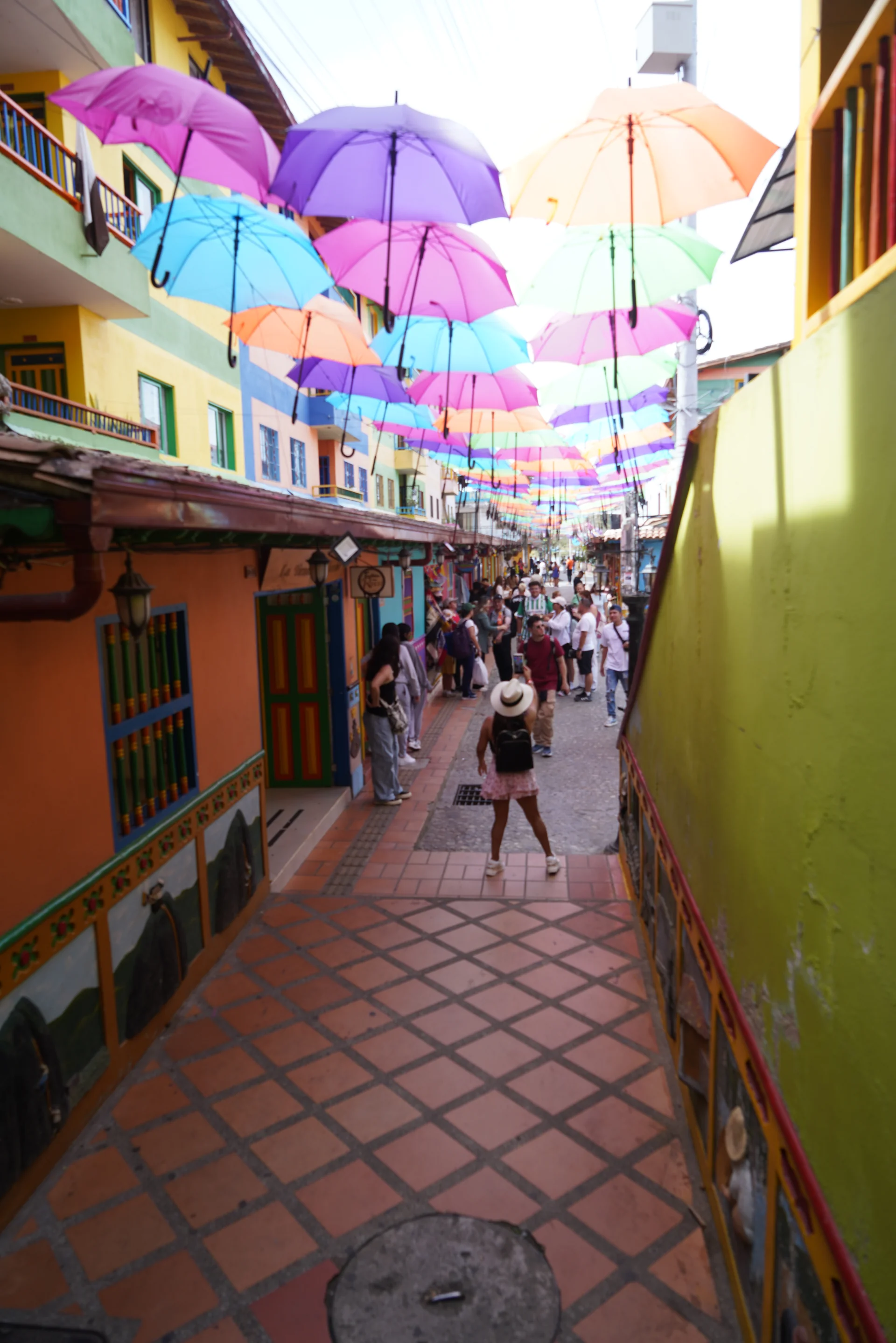
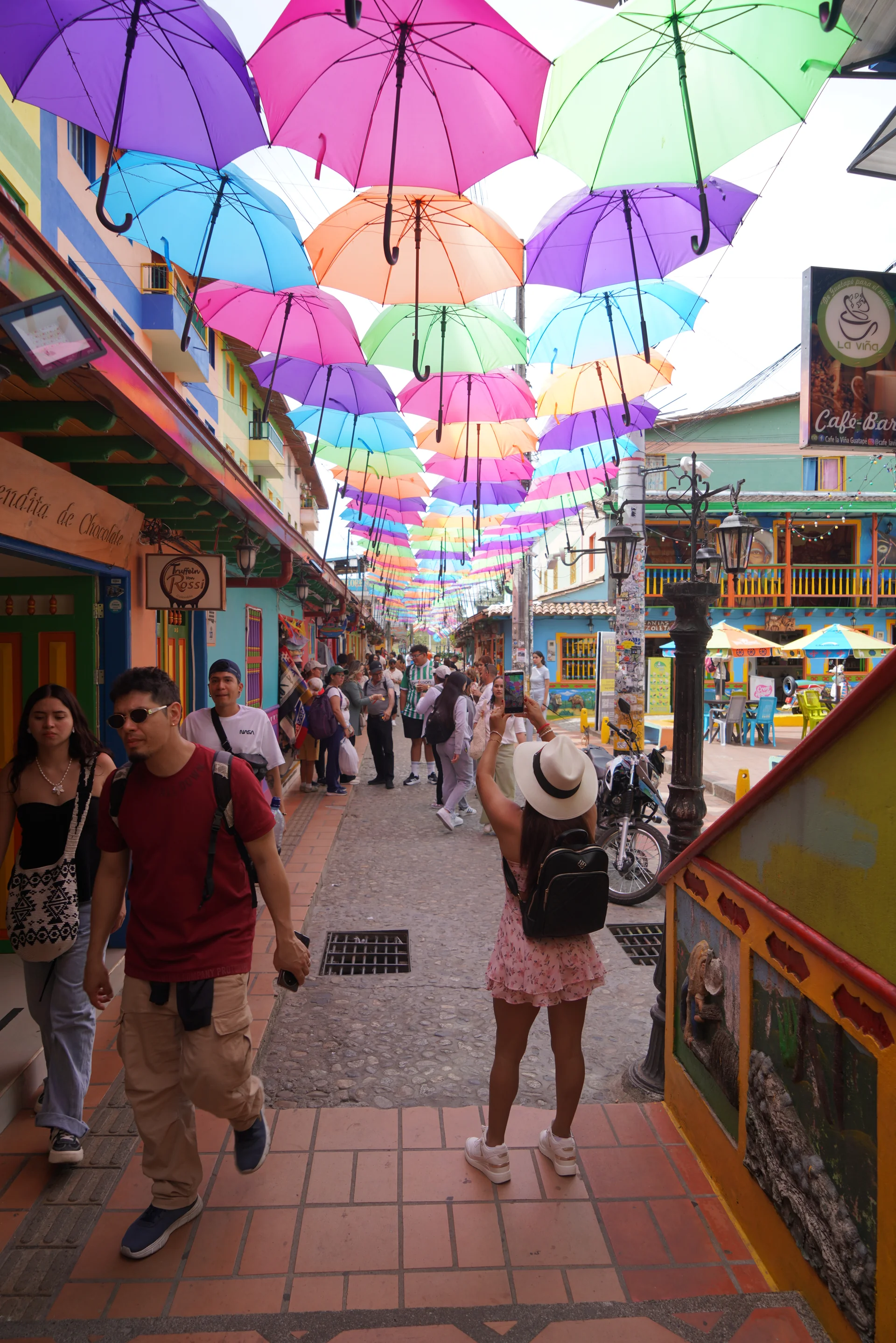
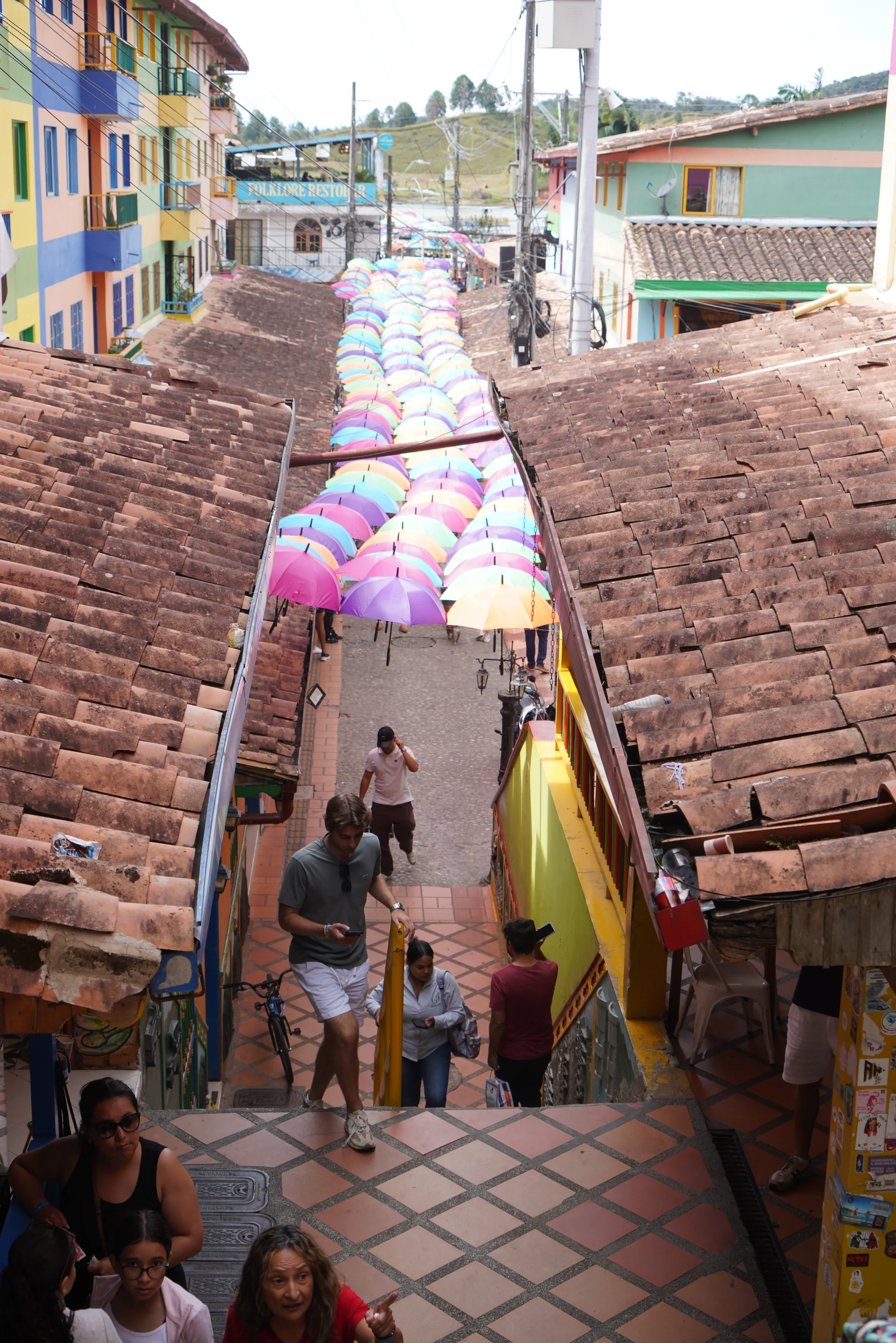
Cobblestone streets, 3D relief panels, the famous umbrella canopy — all within a five-minute walk.
Explore More