
Two Ways to Experience Guatapé
Every weekend, thousands of visitors arrive together, move together, and photograph the same places. They eat at a predetermined stop. They climb the same rock at the same hour as three other buses. They leave on schedule. The experience is efficient. It is also the same experience that everyone else is having — optimized for throughput rather than discovery.
But only a few streets away from the busiest corner, there is a different Guatapé — one where you set the pace. A town with quieter residential streets that most visitors never reach. Restaurants chosen by reputation rather than proximity to the tour drop-off point. Cultural spaces that reward the people who find them. An evening atmosphere that belongs entirely to the people who stayed.
The difference between these two versions of Guatapé is not distance. It is decision. This is what it means to follow your curiosity. This is what it means to Explore Guatapé Freely.
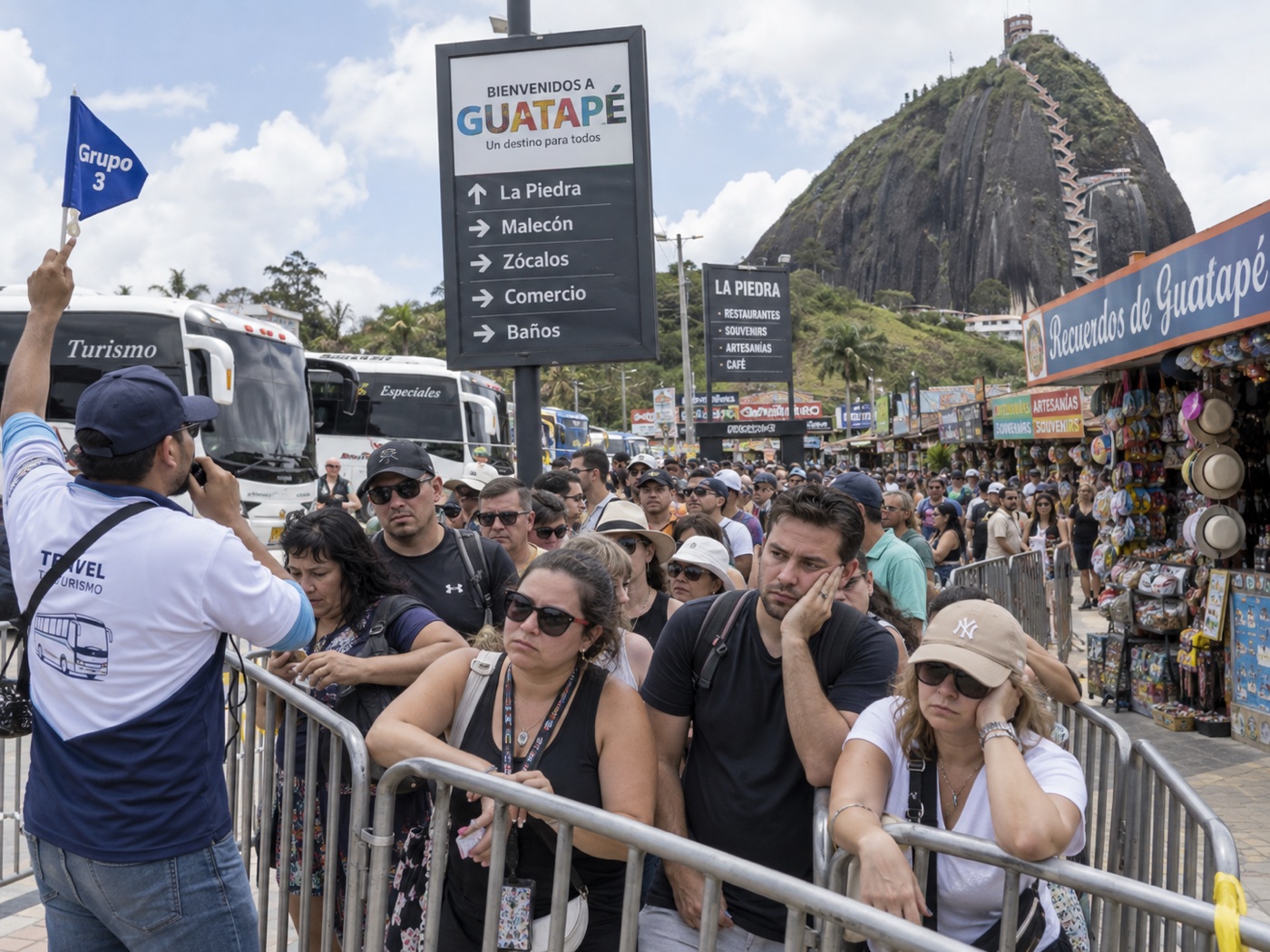
The Rushed Version vs. the Free Version
The Rushed Day Trip
A checklist, not a discovery
- Fixed arrival and departure times
- Crowded attractions at peak hours
- Predetermined restaurant stops
- Little time for side streets
- Group movement patterns
- A few famous photographs
- The same experience as everyone else
- Leaving before Guatapé comes alive
Explore Guatapé Freely
Your time. Your route. Your Guatapé.
- Set your own pace
- Visit what genuinely interests you
- Eat where curiosity and reputation lead you
- Walk beyond the busiest streets
- Stay after the buses leave
- Discover local businesses independently
- Follow the zócalos
- Build a memory, not a checklist
Is Guatapé Too Crowded?
The honest answer is: it depends entirely on when you go and where you walk. Crowds are real in Guatapé. On Colombian holiday weekends, the main pedestrian strip, the plaza waterfront, and the area around La Piedra can feel genuinely overwhelming — multiple tour buses arriving at the same time, groups moving as a single body through narrow streets, restaurants overloaded and rushed.
But those crowds are not spread evenly across the town or across the day. They are concentrated: by time, by location, and by the rhythms of tour schedules. Walk three streets east of the main drag on a weekday morning and the town feels genuinely tranquil. Stay until 5pm on a Saturday and watch the energy transform as the buses leave.
Understanding when and where the crowds gather is what allows you to navigate around them — not by avoiding Guatapé, but by being smarter about how you visit it.
When crowds are heaviest:
- Colombian holiday weekends
- Saturdays and Sundays
- 11am–3pm
- Near the principal plaza and umbrella street
- At La Piedra when multiple buses arrive together
Guatapé may be busy, but it is not uniformly crowded at all hours. Follow your own schedule and the town feels like a different place.
Why Standard Guatapé Day Trips Can Feel Rushed
The structural problem is not a matter of operator quality. It is the design of the format itself. Medellín-to-Guatapé day trips typically include transit that consumes two or more hours in each direction, often combine Guatapé with El Peñol village or other stops, and move large groups through popular attractions at exactly the hours when those attractions are most crowded. Fixed meal stops reduce the ability to choose based on genuine preference. La Piedra, the most visited site, is typically visited at peak midday hours — precisely when queues are longest and the views are harshest.
The result is that Guatapé gets treated as a photo stop rather than a destination. Visitors see the most famous things and miss the things that make those famous things worth visiting in the first place: the cultural context, the quieter streets, the unhurried conversations, the late-afternoon light.
“The problem is not that the famous attractions are unworthy. The problem is experiencing only those attractions and believing they represent the whole town.”
How to Explore Guatapé on Your Own Terms
None of this requires advance booking or special access. It requires only a decision to follow your own curiosity rather than a predetermined script.
Visit on a weekday
Weekdays are noticeably calmer. The streets, restaurants, and La Piedra all feel different when the major weekend groups have not arrived.
Arrive early
Before 10am, the town is yours. The light is better for photography and the streets are easier to walk.
Separate La Piedra from the town
Visit the rock at a different time than the peak town hours. One less crowded, the other often will be too.
Walk beyond the first three streets
The most photographed streets are only a small fraction of Guatapé. The residential streets hold the real character.
Stay after the buses leave
The late afternoon transforms the town. Restaurants clear out, locals reclaim the streets, and the waterfront atmosphere changes completely.
Stay overnight
A morning in Guatapé without day-trip crowds is a completely different experience. The town reveals itself slowly to people who give it time.
Build a flexible route
Choose two or three priorities and leave room for discovery. The best moments in Guatapé rarely appear on standard itineraries.
Follow your heart
If something catches your attention, stop. If a street looks interesting, take it. The best version of Guatapé is the one you find when you stop following a plan.
Eat Where Reputation Leads You
In the busiest parts of Guatapé, restaurant staff sometimes stand at the door encouraging visitors to come in. An energetic invitation is not the same as a good recommendation. The person waving you in from the street is doing their job. That job is not the same as helping you find the best meal for your tastes and budget.
Take a moment before committing. Look at the menu displayed outside. Check recent photos on Google or TripAdvisor. Assess the atmosphere: is it clean, is the staff attentive, does the food on nearby tables look like what you want? Walk one or two streets beyond the most trafficked area and you will often find restaurants with more considered menus, calmer service, and better value.
Casa de Ciclistas, on the main road through town, operates as a breakfast and coffee spot where cyclists and independent travelers tend to gather. It is worth knowing it exists. Casa de Ciclistas →
Before choosing a restaurant:
- Check recent reviews
- Compare menus
- Look at food photographs
- Consider cleanliness and atmosphere
- Walk slightly beyond the busiest street
- Choose based on genuine preference, not urgency
Choosing where you eat is part of exploring Guatapé freely. Follow your curiosity, not a laminated menu handed to you from the street.
Discover the Guatapé Most Visitors Miss
The most rewarding version of Guatapé is rarely found on the standard itinerary. It exists in the details, the conversations, the quieter streets, and the cultural spaces that day-trip schedules simply do not have time for.
Culture & History
- The zócalo stories
- The Museum of Memory
- Local architectural details
- The history of the flooded village
- The origin of Guatapé’s colors
Independent Businesses
- Dulce Amazónica (Amazon ice cream and cultural embassy)
- Casa de Ciclistas (cyclists’ café)
- Independent artisans
- Local bakeries
- Community-run spaces
Nature & Activity
- The reservoir at dawn
- Cycling the backcountry loop
- Kayaking
- Birdwatching
- The road toward San Rafael
- Morning mist on the water
Timing & Atmosphere
- Guatapé before 9am
- The waterfront after 5pm
- A Sunday morning in the residential streets
- The town after rain
- Evening light on the zócalos
The Zócalos Are Not Just Decoration
The zócalos — the painted bas-relief panels that run at knee-height along every street in Guatapé — are one of the most remarkable things about the town, and one of the most overlooked. Each panel was painted by a family or a business to communicate something about themselves: their profession, their traditions, their history, their humor, their identity within the community. They are a visual language, and the entire town is written in it.
Most day-trip visitors walk past them without stopping. Some take a photograph of the most colorful corner and move on. But each zócalo is a story. Following them through the streets of Guatapé — noticing the recurring themes, the family portraits, the playful ones, the solemn ones — is one of the most rewarding things you can do in this town. It costs nothing and takes as long as your curiosity allows.
Follow the Zócalos
The complete guide to Guatapé’s visual storytelling — from family panels to the ones that make locals laugh.
Guatapé Changes After the Buses Leave
Stay long enough and the town begins to breathe differently. The streets become easier to walk. The waterfront atmosphere changes. Restaurants clear and the service becomes more attentive. Local residents reclaim the plazas. The light becomes remarkable. The musicians sometimes appear. And the version of Guatapé that most visitors never see starts to become visible.
“Stay long enough and the town begins to show you something it hides from everyone who leaves at 4pm.”
Build Your Own Guatapé Day
These are not rigid itineraries. They are starting points. Follow your heart from there.
Early Arrival
Quiet Morning Guatapé
3–4 hours · Before 10am · For: Photographers, solo travelers, anyone who hates crowds
Arrive before the first buses. Walk the residential streets. Have a slow breakfast. Watch the town wake up before the rush begins.
Cultural Route
Culture Beyond the Photo Stops
Half day · Any weekday · For: History lovers, curious travelers
Follow the zócalos through the residential streets. Visit the museum. Stop for coffee. Let the cultural details of Guatapé tell you something the standard itinerary never does.
Food Route
Independent Food Walk
2–3 hours · Lunch or late afternoon · For: Food-focused travelers
Walk beyond the first three tourist streets and compare your options before choosing. Guatapé has excellent local food. The trick is choosing based on reputation, not proximity to the busiest corner.
Evening Route
Guatapé After the Buses Leave
3–4 hours · 4pm onward · For: Anyone staying overnight or arriving late
Start when the largest groups start leaving. Walk to the waterfront. Have dinner at a restaurant that now has space to breathe. Watch the light change. This is the version of Guatapé that most day-trip visitors never see.
Overnight
One Night in Guatapé
2 days / 1 night · For: Anyone who wants the full experience
A night in Guatapé changes everything. You get two calmer mornings, one relaxed dinner, and the freedom to follow your curiosity without watching the clock. This is the itinerary that makes people want to come back.
Active Route
Cycling the Backcountry Loop
2–3 hours · Early morning · For: Cyclists, nature lovers, birdwatchers
The backcountry loop passes through bird habitat, reservoir views, and local farms that day-trip buses never reach. Mountain Bike Colombia runs a free group ride Monday, Wednesday, and Friday at 7:30am.
Is Guatapé Worth Visiting?
Yes — but the experience depends almost entirely on how you visit. A rushed peak-hour stop with a fixed itinerary can feel crowded and commercial, and you might leave wondering what the fuss was about. A flexible visit with time for discovery reveals something completely different: a town with genuine cultural value, extraordinary color, a remarkable reservoir, and a community that rewards curiosity.
The town has a history, an architecture, a living tradition of visual storytelling in its zócalos, independent restaurants and cafés, natural beauty within walking distance, and an evening atmosphere that changes the energy of everything. None of that is accessible on a schedule that gives you three hours and a predetermined lunch stop.
Guatapé is worth visiting when you give yourself enough freedom to discover it.
Your Free Guatapé Plan
Save this before you go.
Choose your own arrival time — avoid holiday weekends if possible
Visit La Piedra and the town at different times to avoid double-peak crowds
Walk at least four or five streets beyond the main pedestrian strip
Check restaurant reviews before choosing — not after you’re already inside
Include at least one cultural stop: zócalos, museum, or local artisan
Leave time for something you didn’t plan
Ask before photographing people
Support businesses you genuinely value, not just the nearest ones
Stay until at least 4pm — longer if you can
Have dinner in Guatapé instead of rushing back
Book one night if the budget allows — morning Guatapé is a different town
Follow your curiosity. That is the whole plan.
Guatapé Is a Community, Not a Theme Park
The things that make Guatapé special — the painted streets, the zócalos, the small businesses, the reservoir views — all exist because people live here and maintain them. Respectful visitors help sustain what draws them in the first place. That means being considerate about photographing residents’ homes and asking before photographing people. It means avoiding blocking narrow residential streets for the sake of a photograph. It means disposing of waste properly, supporting locally owned businesses, and paying fair prices without haggling aggressively. In residential areas, keeping noise down after dark matters to the people who live there. If you fly a drone, check local regulations and be considerate about when and where you do it.
None of this is complicated. Treat the town as the living community it is, and your presence adds to it rather than diminishing it. Independent travel done well leaves a place better than it found it.
Frequently Asked Questions
Is Guatapé too crowded?
Guatapé can feel crowded on holiday weekends and at midday near the plaza and waterfront. But the crowds are concentrated by time and location. A weekday visit, an early arrival, or a route that goes beyond the main tourist streets can feel completely different.
What is the least crowded time to visit Guatapé?
Weekday mornings before 10am are the calmest. Avoid Colombian holiday weekends, particularly Semana Santa, and the long weekends in June, August, and October.
Is Guatapé better on a weekday?
Yes, noticeably. The main attractions, restaurants, and streets are all more comfortable on a Tuesday or Wednesday than on a Saturday.
Should I stay overnight in Guatapé?
If your budget allows it, yes. A night in Guatapé gives you access to two calmer mornings, a relaxed dinner, and the evening atmosphere that most day visitors never see.
Can I visit Guatapé without a tour?
Easily. Guatapé is well connected by bus from Medellín and navigable entirely on foot. Everything on this page assumes you are traveling independently.
How do I travel from Medellín to Guatapé independently?
Buses run regularly from Medellín’s Norte terminal (Terminal del Norte) to Guatapé. The journey takes approximately two hours. See the full guide: Getting to Guatapé.
How much time should I spend in Guatapé?
One full day is the minimum to experience the town properly. Two days is better. More than two days suits visitors interested in cycling, nature, or slower exploration.
Should I visit La Piedra before or after the town?
Visiting La Piedra early (before 10am) and then spending the rest of the day in town often works well. Alternatively, visit the town first and La Piedra in the late afternoon.
What can I do in Guatapé besides climb the rock?
A great deal. Cycling, kayaking, zócalo exploration, boat tours on the reservoir, local restaurants and cafés, cultural spaces, museums, birdwatching near the water, and day trips toward San Rafael. See: Things to Do in Guatapé.
Is Guatapé worth visiting if I do not like crowds?
Yes — with the right timing and approach. A weekday, an early morning, or a route that avoids the most trafficked streets can be genuinely peaceful.
Where can I find quieter streets in Guatapé?
The residential streets north and east of the main plaza. Any street that does not appear in the most photographed Instagram collections of Guatapé is almost certainly calmer.
How do I choose a good restaurant in Guatapé?
Check recent Google or TripAdvisor reviews. Look at menu photographs. Walk one or two streets beyond the busiest pedestrian strip. Avoid choosing based on who approaches you most energetically from the street.
What happens in Guatapé after the day tours leave?
The streets calm down, the waterfront changes atmosphere, and the town returns to something closer to its everyday character. Late-afternoon Guatapé is one of the best-kept secrets of the region.
Is one day enough for Guatapé?
One day is enough to see the highlights. It is not enough to discover the town. Two days gives you the freedom to be curious.
What cultural places should I visit in Guatapé?
The zócalos throughout the town, the local museum, Dulce Amazónica (a cultural space representing Amazon communities), and the plaza area. The Zócalo Sessions page has more: The Zócalo Sessions.
Can families explore Guatapé independently?
Yes. The town is compact, walkable, and safe. La Piedra is manageable for most children and older travelers. The waterfront, the colored streets, and the boat tours all work well for families.
What should I do in Guatapé when it rains?
Visit the museum, explore the covered sections of the market, have a long breakfast or lunch, walk the zócalos (which are often beautiful in rain), or visit Dulce Amazónica.
Is Guatapé safe to explore independently?
Yes. Guatapé is one of the safer tourist towns in Antioquia. Standard precautions apply. See: Is Guatapé Safe?
Are there free things to do in Guatapé?
Many. Walking the zócalo streets, visiting the plaza, watching the waterfront, exploring residential streets, the free cycling ride with Mountain Bike Colombia (Monday, Wednesday, Friday at 7:30am), and simply following your curiosity through the town.
How can I support local businesses in Guatapé?
Choose restaurants, cafés, and shops independently. Visit Dulce Amazónica and Casa de Ciclistas. Buy directly from local artisans. Spend money where you genuinely want to, not where you are directed by external pressure.