
Start here
Only have one day?Worth staying overnight?Beyond the Piedra?Are there four piedras?Wildlife?Cycling?Go farther east?Waterfalls & rivers?Culture?
How much time do you have?
- 4–6 hours: the classic highlights. Is a day enough?
- One day: choose your priorities. One day · besides the Piedra
- One night: evening, morning, and one real experience. Should I stay? · after the buses leave
- Two days: backcountry, water, cycling. by bike or kayak · the reservoir
- Three or more days: the region. beyond Guatapé · San Rafael · San Carlos
More time is not “better”, just different. A good day trip is a fair choice.
Explore the region
A discovery map of how it all connects, not turn-by-turn directions. Tap a place to jump to its answer.
On the packaged day trip, buses make set meal stops (like Alto de Chocho) for breakfast and lunch before turning back to Medellín. Stay over and you eat where you like, on your own time.
All the questions
Should I stay overnight? · Is one day (or six hours) enough? · What can I do besides the Piedra? · Are there really four piedras? · Can I experience the region by bike, kayak or boat? · How can I experience the Piedra differently? · What happens after the buses leave? · Is the town or the countryside better? · Has Instagram distorted Guatapé? · What lies beyond Guatapé? · San Rafael · San Carlos · Where can I do yoga near Guatapé? · Where can I see monkeys, toucans and birds? · What can I do on the reservoir? · What do the zócalos mean, and what’s the history? · What is Dulce Amazónica, the Embassy to the Colombian Amazon? · Are there monasteries or singing monks near Guatapé? · How do I get to Guatapé and beyond? · After coming all this way, why rush back? · Where should I stay in Guatapé? · Free things to do · How do I get from Medellín to Guatapé, and back? · How do I get from the airport (JMC) to Guatapé? · How do I get around Guatapé? · Do I need cash, or can I pay by card? · Pharmacy, wifi, and leaving your bags · La Piedra: hours, cost and the climb
Should I stay overnight?
If you can spare the time, staying one night is one of the easiest ways to experience a very different Guatapé. You gain the quieter evening and early morning that most day visitors miss, without needing to pack more attractions into the trip.
One easy way to use that early start: Mountain Bike Colombia runs a free morning ride into the countryside, where you spot birds across the region and, often, monkeys.
Related: What happens after the buses leave? · Where should I stay? · Is one day enough?
Open another door → The famous Piedra is only one of four in the region.
Is one day (or six hours) enough?
Enough for the highlights, not for the region. In a day you can climb the Piedra and walk the town, both at their busiest. If a single day is what you have, do it well: go early, choose a few things, and skip the rest without guilt.
Related: What can I do besides the Piedra? · Should I stay overnight? · How do I get here?
Open another door → Curious what a day looks like off the standard circuit?
What can I do besides the Piedra?
Plenty. The reservoir by kayak or boat, cycling the backcountry, the zócalos with their real stories, wildlife in the countryside, and the whole region east of town. The Piedra is the postcard, not the picture.
Related: See it by bike or kayak · After the buses leave · What lies beyond Guatapé?
Open another door → Where can I see monkeys and toucans?
Are there really four piedras?
Yes. Most people only meet Piedra del Peñol, but the wider story has four: Piedra del Peñol, El Marial, Peñolcito in San Vicente Ferrer, and El Tabor in San Carlos. Mountain Bike Colombia links the first three in a single lake-and-bike day; El Tabor sits farther east, its own journey.
Related: Can I bike between them? · Experience the Piedra differently · What lies beyond Guatapé?
Open another door → El Tabor is in San Carlos. Why turn around at Guatapé?
Can I experience the region by bike, kayak or boat?
That is where Guatapé opens up. On foot you see the town; on the water you see the reservoir; on a bike you feel the hills and the distances between things. Mountain Bike Colombia runs a lake-and-bike day that links three of the region’s piedras. The slow way is the point, not the inconvenience.
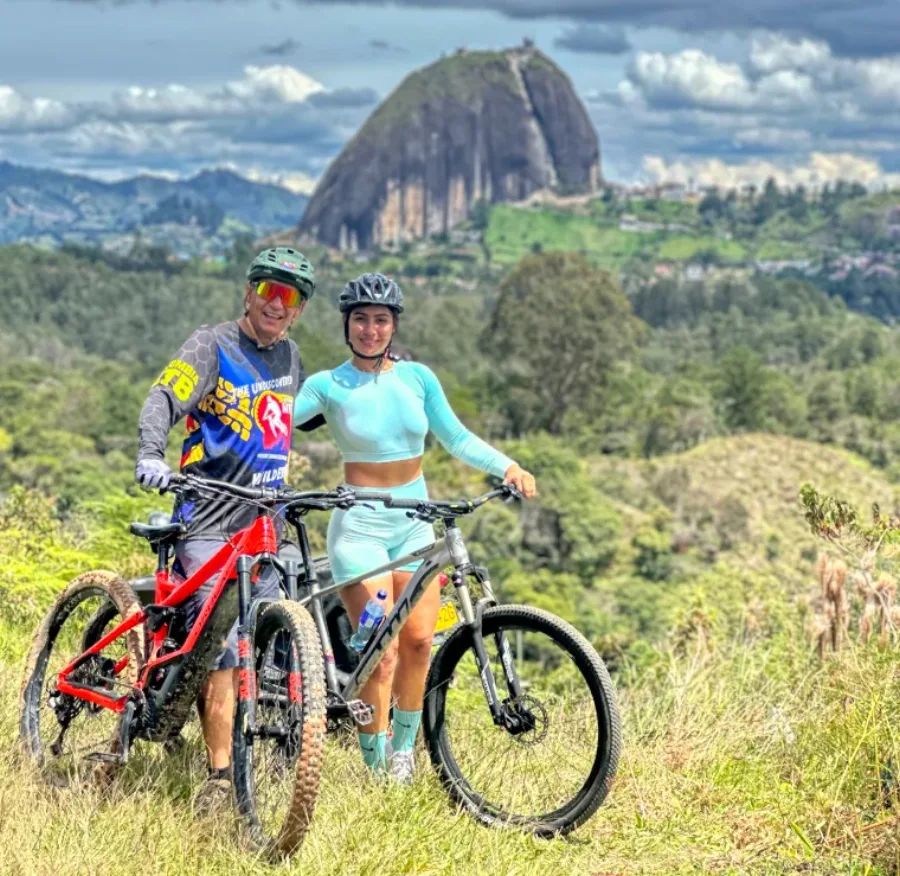
There is also a free morning ride: an unhurried way into the countryside where you see birdlife and, often, monkeys.
Related: Are there four piedras? · What can I do on the reservoir? · What lies beyond Guatapé?
Open another door → The bike route connects three piedras in one day.
How can I experience the Piedra differently?
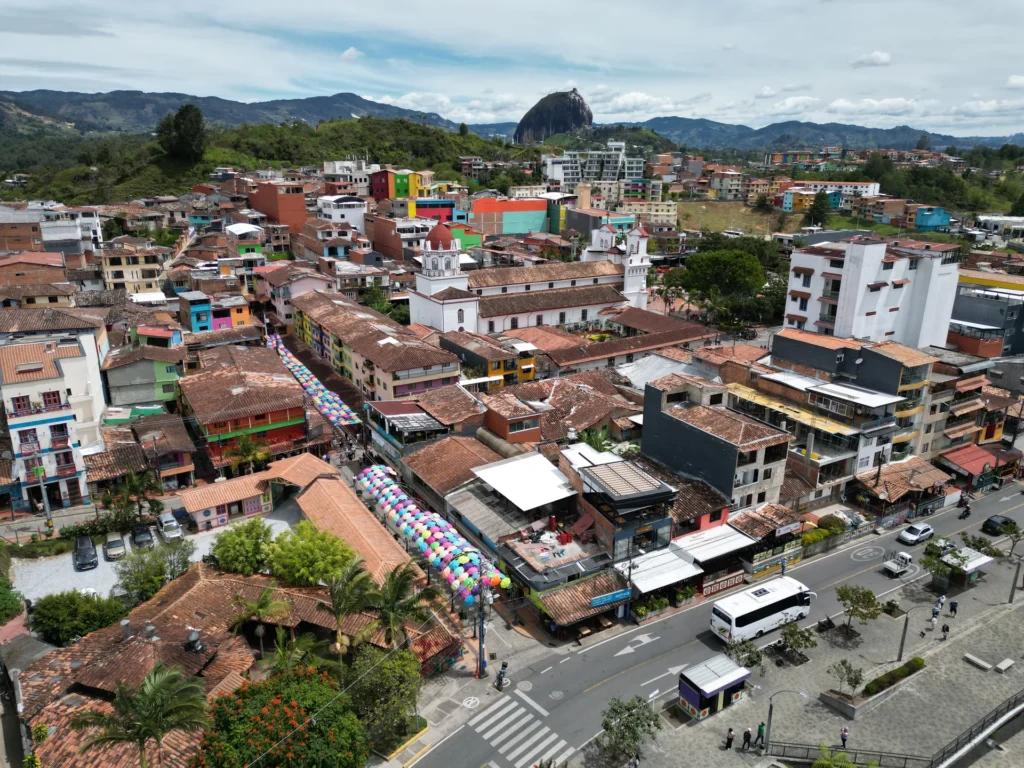
Climbing it is one way, and the busiest. With more time you see it from the reservoir, from a bicycle, from the rural roads, in morning light, in rain, at sunset, framed by the forest, birds and farms around it. The day tripper stands on the Piedra and looks at nature; the overnighter has time to move through the nature surrounding it, and see the rock from entirely new perspectives.
Related: When is it quietest? · By bike or boat · Are there four piedras?
Open another door → There are three more of these rocks in the region.
What happens after the buses leave?
The town exhales. The day-trip buses clear by late afternoon, the sidewalks empty, dinner slows down, and the reservoir turns gold. Same Guatapé, minus the crowd and minus the clock. You only get it if you are not on the bus back to Medellín.
Related: Should I stay overnight? · Where should I stay? · On the reservoir
Open another door → The reservoir at golden hour is the part day trips skip.
Is the town or the countryside better?
Both, and the reservoir ties them together. The town is colour and human creativity: the zócalos and the painted streets. The countryside is space, water, farms and mountains, and it starts just minutes past the plaza. Most visitors only ever see the first.
Related: What can I do besides the Piedra? · What lies beyond Guatapé? · Where can I see wildlife?
Open another door → Past the farms is a whole region east.
Has Instagram distorted Guatapé?
A little. The feed shows umbrellas, the painted zócalos and the rock, and skips the rain, the silence, the wildlife, the ordinary neighbourhoods and the region around it. The photogenic Guatapé is real, it is just not the whole one. The zócalos, for one, are not decoration: each panel tells a story.
Related: What do the zócalos mean? · Besides the Piedra · Town vs countryside
Open another door → The walls of the town record its history.
What lies beyond Guatapé?
A whole region most Medellín visitors never hear about. East of town the road runs to San Rafael, with crystalline rivers, waterfalls, tubing and wildlife, and on to San Carlos, with more rivers, jungle mountains and Piedra El Tabor. The real question is not how long to stay in Guatapé; it is why turn around here at all.
Related: What can I do in San Rafael? · Is San Carlos worth it? · How do I get east?
Open another door → San Rafael’s rivers are ninety minutes away.
San Rafael
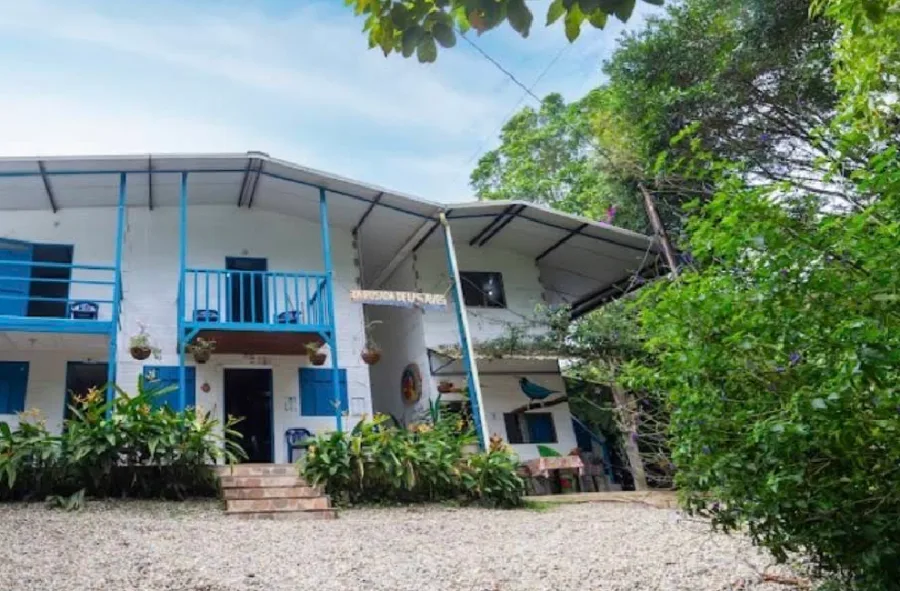
San Rafael is the river country east of Guatapé: crystalline rivers, waterfalls and natural swimming holes, with tubing, fishing, trekking and canyoning, plus monkeys, toucans and butterflies in the forest, and cacao, coffee, panela and native honey on the farms. It is the easiest place to feel how much bigger this region is than the rock.
Related: How do I get to San Rafael? · Where can I see wildlife? · Is there yoga out here?
Open another door → There’s a yoga and Ayurveda retreat this way, and San Carlos beyond it.
San Carlos
San Carlos is farther east and wilder: rivers, waterfalls and natural pools, jungle-covered mountains, hundreds of bird species, hiking, canyoning, tubing and climbing, and Piedra El Tabor. It came through a hard chapter of Colombia’s history and is now one of eastern Antioquia’s quiet adventure capitals. It answers the question the day trip never asks: why stop at Guatapé?
Related: How do I get to San Carlos? · Are there four piedras? · What can I do in San Rafael?
Open another door → El Tabor is the fourth piedra.
Where can I do yoga near Guatapé?
Vanadurga is a yoga and meditation retreat in the region, centred on Hatha yoga, meditation, Ayurveda and Vedic philosophy in a natural setting. It is a very different reason to slow down out here, and a natural pairing with the rivers of San Rafael. For a spa or a massage rather than a retreat, several of Guatapé’s hotels and countryside glamping stays have their own, so look for a hotel with a spa or ask your accommodation.
Related: What is there to do in San Rafael? · What lies beyond Guatapé? · Where can I slow down?
Open another door → San Rafael’s rivers are the same direction.
Where can I see monkeys, toucans and birds?
Yes, though it means leaving the town. In the countryside and east toward San Rafael you can see monkeys, toucans, hummingbirds, motmots, kingfishers, guacharacas and butterflies. Nothing is guaranteed, and the good places are not the crowded ones. Early and slow is how you actually see them.
An easy way in: Mountain Bike Colombia’s free morning ride heads into the countryside, where birds and, often, monkeys turn up.
Related: Where’s the best nature? · What can I do in San Rafael? · What’s the countryside like?
Open another door → The richest wildlife is east, in San Rafael.
What can I do on the reservoir?
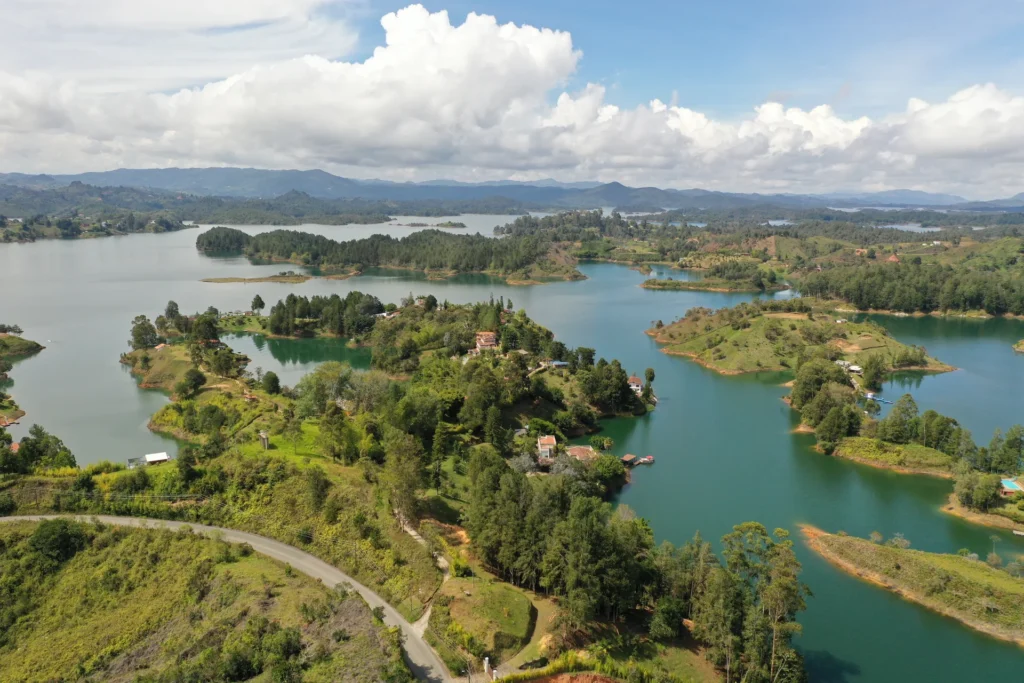
The reservoir is not just a backdrop for photographs; it is also where many activities take place. You can explore it by kayak or paddleboard, or take a boat into its quieter coves. Swimming may also be possible in some areas, but check current conditions and public advisories before entering the water.
Before you enter the water, check conditions. Water quality in the reservoir varies by place and by time. Wastewater discharges into the reservoir from developed areas around Guatapé have been observed, and water closer to an active discharge has greater direct exposure to contaminants from that source before dilution and mixing occur. Operating farther from observed urban discharge areas can reduce exposure to those particular sources, although location alone does not certify water as completely clean or risk-free. Check current public advisories, and ask where an activity actually takes place before you get in.
Compare direct providers, where they operate, and what to ask before you pay →
Related: Can I kayak here? · What’s Guatapé like at dawn? · Besides the Piedra
Open another door → The rivers east of here are the wild version of this water.
What do the zócalos mean, and what’s the history?
Guatapé’s painted zócalos are the town’s signature, and they are not just pretty: each low-relief panel records a trade, a story, or a piece of local life. Behind the colour is a real history, including the reservoir that reshaped the whole region. Read the walls and the town gets deeper.
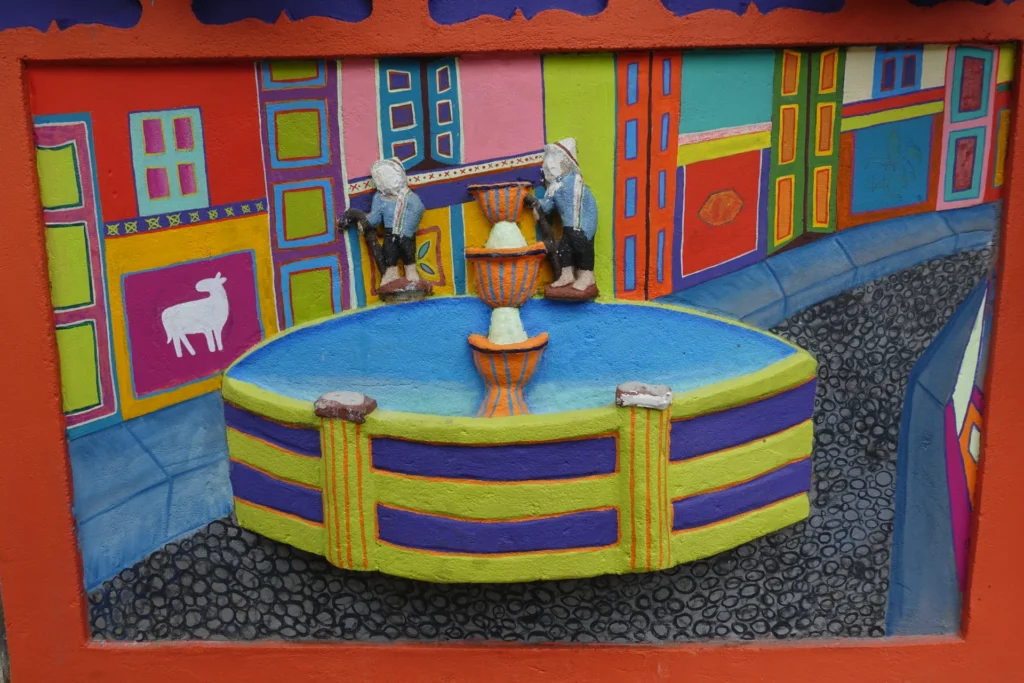
Related: Is Guatapé just the photos? · What can I do besides the Piedra? · The Embassy to the Amazon
Open another door → There’s an Embassy to the Colombian Amazon in town.
What is Dulce Amazónica, the Embassy to the Colombian Amazon?
Dulce Amazónica is the Embassy to the Colombian Amazon, here in Guatapé: an Indigenous-run cultural embassy where you can encounter Amazonian foods, botanical products and Indigenous-made work, and learn about Amazon cultures and biodiversity. The point is respect and fair trade, not charity. You come to learn, taste and engage with ancestral knowledge on its own terms.
Related: What else is cultural in Guatapé? · What can I do besides the Piedra? · What lies beyond Guatapé?
Open another door → One more sign Guatapé is a doorway, not an endpoint.
Are there monasteries or singing monks near Guatapé?
There is a monastic tradition in the region, and the idea of hearing sung services in a forest setting is one of the quieter discoveries here. We treat it with respect, as a place of worship rather than an attraction, and we are confirming access and service times before pointing anyone there.
Related: Where can I do yoga? · What’s an off-circuit day like? · What lies beyond Guatapé?
Open another door → There’s a yoga and meditation retreat in the same region.
How do I get to Guatapé and beyond?
Depends on the leg, so pick yours. Medellín to Guatapé: bus or private shuttle. Around Guatapé and to the Piedra: tuk-tuk, local transport or bike. From the airport: airport transfer options. Guatapé onward to San Rafael and San Carlos: separate regional transport, different for each leg.
Related: What lies beyond Guatapé? · San Rafael · Should I stay overnight?
Open another door → Continuing east is easier than most people assume.
After coming all this way, why rush back?
No reason, if you can help it. You travelled to get here, and the day trip hands you the busiest, most packaged version and then puts you back on the bus before the best part. A good day trip is a fair choice, and for some people it is the right one. But staying longer, and even continuing east, is where Guatapé stops being a stop and starts being a beginning.
Related: Should I stay overnight? · What lies beyond Guatapé? · What can I do with an extra day?
Open another door → The road runs east to San Rafael and San Carlos.
Where should I stay in Guatapé?
Depends what you want from the night. Town for restaurants, walking and evening atmosphere; the reservoir for water, views and quiet; the countryside for nature and slower travel. Any of the three beats the bus back to Medellín. Traveling solo? Several of the in-town hostels have female-only dorms, so filter for that when you book (availability changes). Our full guide has the specific places.
Related: Should I stay overnight? · What’s there to do in the evening? · What’s Guatapé like at dawn?
Open another door → Where you sleep shapes which Guatapé you wake up in.
What free things to do are there in Guatapé?
More than most people expect. Wandering the painted zócalos and the plaza costs nothing, and sunset over the reservoir is free every evening. Mountain Bike Colombia even runs a free morning ride into the countryside, where you see birds and, often, monkeys. The best free thing of all is the town itself, once the day-trip buses leave.
Related: What can I do besides the Piedra? · The free morning ride · After the buses leave
Open another door → What lies beyond Guatapé?
Practical basics
The nuts and bolts, answered. Each answer links to its full maintained guide.
How do I get from Medellín to Guatapé, and back?
The public bus is the cheapest and easiest: buses leave Medellín’s Terminal del Norte every 30 to 60 minutes from about 6am to 6pm, cost roughly COP 20,000–24,000 each way (confirm the current fare), and take around 2 hours. No booking, just buy at the counter. Getting back is easier than people think. The direct Guatapé bus is not your only ride to Terminal del Norte: the El Peñol, San Rafael and San Carlos buses all pass through Guatapé on their way to Medellín too. If the direct bus is full or you have missed it, wave one down from the main road, no terminal and no ticket counter needed. The stop is right in front of Casa de Ciclistas. Prefer door to door? Uber and Cabify run COP 90,000–180,000; a private van is COP 180,000–450,000 for the whole vehicle.
Open another door → What changes when the day-trip buses leave?
How do I get from the airport (JMC) to Guatapé?
José María Córdova airport is in Rionegro, already halfway to Guatapé, so skip Medellín. Cheapest route: take a taxi or Uber to Marinilla terminal (about 15 minutes, around COP 15,000), then the direct bus from Marinilla to Guatapé (about 1 hour, COP 10,000–14,000). Easiest: a private transfer straight from the airport, COP 180,000–280,000 for the vehicle. Skip routing back through Medellín’s Terminal del Norte, it adds 1.5 to 2 hours for nothing.
How do I get around Guatapé?
The town center is small, walkable end to end in 10 to 15 minutes, so you will not need transport for most things. Tuk-tuks cover the rest: COP 5,000–10,000 for short hops in town, COP 8,000–15,000 out to La Piedra. Agree the fare before you climb in. There is no local town bus. To reach La Piedra: tuk-tuk 10 to 15 minutes, car 10 minutes (parking COP 3,000–5,000), or about 40 minutes on foot, fine early and hot at midday. Bikes rent for COP 10,000–20,000 an hour.
Open another door → Can you link three piedras in one lake-and-bike day?
Do I need cash, or can I pay by card?
Bring some cash. There are ATMs near the main square, but they can run dry on busy weekends, so do not rely on a single one. Cards work at the bigger restaurants, hotels and the La Piedra entrance; tuk-tuks, boat operators, street vendors and smaller restaurants are often cash only. Carry COP 30,000–50,000 in cash and you are covered for the day.
Pharmacy, wifi, and leaving your bags
Pharmacy: there is a local health post and pharmacies on the main streets for everyday needs. For anything serious, Medellín is 1.5 to 2 hours away, so travel insurance is worth having. WiFi: yes, at most hotels and restaurants. Mobile data (Claro, Movistar, Tigo) works well in town and on La Piedra; reception is variable on the reservoir and on hiking trails. Luggage: if you are stopping at Casa de Ciclistas, guests can leave their bags there while you explore, handy between the bus and a late checkout.
La Piedra: hours, cost and the climb
La Piedra del Peñol is open 8am to 6pm daily, with the ticket booth closing around 5pm. Entry is COP 35,000, cash or card at the base. The climb is 740 steps, roughly 20 to 35 minutes up and 15 to 25 down; allow 1.5 to 2 hours with time at the top for the reservoir view. It is quietest right at opening, before the tour buses arrive. There are toilets at the base (not at the summit), leave big bags at your hotel and bring only a small daypack, and wear comfortable closed shoes for the 740 steps.
Open another door → The famous Piedra is only one of four — meet the rest.
Is it safe, and how do I get around on my own?
Two honest answers, because you are really asking two things. In practical terms, Guatapé is a small, busy tourist town and solo travelers move around it comfortably every day. Whether you will feel comfortable depends on the moment. The town center is compact, walkable and lit in the evening, with people about until the restaurants close, so an after-dinner walk in town is usually fine. Agree a tuk-tuk fare before you get in (short hops are COP 5,000–10,000). If you are staying out in the countryside, plan your evening ride with your hotel rather than assuming one will appear, and try to arrive in daylight the first time. There is no women-only driver service in the town itself, so for a private car, have your accommodation arrange a driver they know. The bus from Medellín’s Terminal del Norte is routine and well-used. Beyond that, trust your own read of a place over anyone’s blanket “it’s totally safe.”
Can I go paragliding near Guatapé?
Yes, but not where the ads imply. You do not fly over La Piedra del Peñol. The flight sold as “Guatapé paragliding” happens outside town, and the strongest, best-value flying in the region is in Cocorná.
Wherever you fly, paragliding is a high-consequence activity, so book direct with the pilot, never a broker, and vet the operation first: check certification and years flying tandem, read the recent Google reviews and how the operator answers the unhappy ones, and confirm they reschedule for bad weather without pressure. How a company handles a bad day tells you how it will handle yours.
We book nothing and earn no commission. We point you to the safest, best-reviewed pilots because it is honest, not because it pays.
If something feels off, or you need help
Trust that instinct first. Step into the nearest open place: a restaurant, a hotel lobby, a shop, or the main plaza, which stays busy into the evening. Your accommodation is your best first contact, call or message them and they will help you sort transport or anything else. For a real emergency anywhere in Colombia, dial 123 (police and ambulance). You never owe a stranger politeness: if a situation feels wrong, it is completely fine to walk away.
Which wakeboard or water-sports provider is best?
We do not name one. The available evidence does not support naming one provider as the best. The evidence also does not support naming one provider as the safest or cheapest, or claiming that one operates in the cleanest water.
What we can tell you is who actually runs the session. Some businesses in the Guatapé area operate with their own boats, instructors and teams. Others take your booking and hand you to somebody else, and you often do not learn who that is until you arrive. Guatapé Guide works only with providers who deliver the service themselves, and our comparison lists only those.
Price is the thing travellers most want ranked, and it is the thing that cannot be ranked here. Wakeboard providers sell in different booking units: one by the hour or by the day, one by named boat, one does not publish a price at all. A number attached to one unit does not compare to a number attached to another, so a “cheapest” list would mislead you.
The Google ratings in our comparison are reference data, not recommendations. They record what previous customers chose to post. A rating or a review count is not a safety record, an inspection or a guarantee.
Location does not guarantee water quality either. Being far from town, or close to a marina, tells you nothing reliable about the water on the day you go. If water condition matters to you, ask the provider directly what they know about it.
Before you pay, confirm all of this with the provider:
- who delivers the service on the day, and whether it is the business taking your money
- the departure point
- the area they actually operate on the water
- the booking unit: per person, per hour, per boat or per day
- the total price, and what is included
- the weather policy
- the cancellation terms
More guides: Where to stay · Where to eat · Safety · Best time to visit · Budget · Full FAQ
Not here yet?
This section is growing. If you don’t see your question, search the full Guatapé Guide.
Every answer here is verified by local experience and ordered on merit, not commission. Ask a question. Get an answer. Then discover the question you didn’t know to ask.
Interactive search, filters and a regional map are coming to this section. For now, browse the questions above.